Urban Density Analysis: 5 Best Critical Vice City Needs
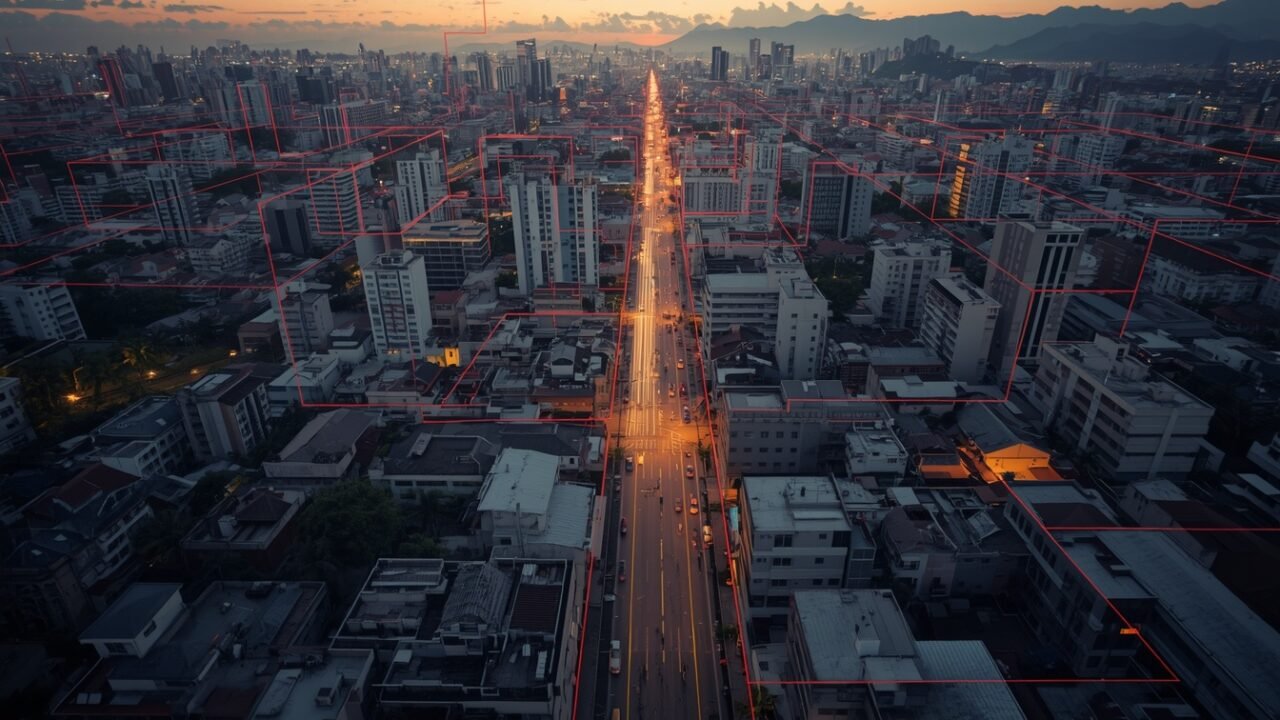
Urban Density Analysis:
City design is where open-world games most visibly succeed or fail, because cities are where players spend the majority of their time and where simulation cost concentrates.
Confirmed: Vice City is the urban centre of the state of Leonida. Rockstar has published no district names, layout or dimensions.
This analysis examines the five design problems a modern Grand Theft Auto city has to solve.
1. Density Must Be Simulated, Not Just Rendered
The distinction that separates a good city from a pretty one.
Rendering a crowd is comparatively cheap. Simulating one — individual pathing, reaction behaviour, awareness, interaction with traffic and the player — is expensive and CPU-bound.
Shown in official footage: populated beachfronts, active traffic and varied pedestrian behaviour occurring concurrently.
What makes it viable: the confirmed current-generation-only platform target. Zen 2-class processors and 16GB unified memory against GTA V’s 2005-era architecture and 512MB split memory.
Not confirmed: any NPC count, simulation radius or behavioural complexity. Rockstar publishes none.
2. Vertical Structure Creates Cost and Opportunity Simultaneously
Inferred from official footage. Vice City’s architecture includes high-rise blocks alongside lower-rise Art Deco frontage.
The opportunity: verticality creates traversal options, sightline variation and pursuit dynamics that a flat city cannot support.
The cost: vertical geometry multiplies rendering load and complicates AI navigation. Pathfinding across a multi-level environment is substantially harder than across a plane.
Open question: whether Rockstar implements verticality systemically — climbing, rooftop traversal — or architecturally only. Nothing is documented.
3. The State Framing Changes What the City Must Contain
Confirmed: Vice City is the urban centre of Leonida, not the entire map.
Why this is a structural advantage. The 2002 Grand Theft Auto: Vice City was a city game — every system, mission and activity had to fit within it.
In Leonida, the city shares load with beachfront, wetlands, countryside and coastal water.
Analytical consequence: Vice City can specialise. It does not need to contain a rural section or a wilderness area, which frees it to be denser and more vertical than a city carrying an entire game could afford.
4. Waterfront Adjacency Changes the City’s Tactical Properties
Confirmed through official footage: extensive beachfront appears alongside the urban core.
The GTA V comparison: Los Santos had a coastline, but its centre of gravity was inland and water functioned largely as a boundary.
Why adjacency matters systemically: a city accessible by water has different approach vectors, different escape routes and different mission-design possibilities than a landlocked one.
The open question: whether Rockstar exploits this systemically — marine pursuit, water-approach mission design — or whether the waterfront is primarily aesthetic.
Confirmed: nothing about water mechanics or law enforcement behaviour.

5. Interior Access Is the Most Expensive Unresolved Question
The problem with no cheap solution.
A city where most buildings are impassable reads as a facade. A city where most are enterable is prohibitively expensive to author.
Available approaches:
| Approach | Trade-off |
|---|---|
| Selective authored interiors | Quality per interior, limited coverage |
| Procedural or templated interiors | Coverage, repetition |
| Mission-only interiors | Cheapest, least immersive |
Confirmed for GTA 6: nothing. Rockstar has published no interior counts or access information.
Why it matters more here: high external density raises the expectation of internal density. A city that looks alive outside and is sealed inside creates a more noticeable dissonance than a sparser city would.
What Is Not Published
| Element | Status |
|---|---|
| City dimensions | Not published |
| District names or layout | Not published |
| Interior counts | Not published |
| NPC density figures | Not published |
| Verticality systems | Not documented |
| Traffic AI behaviour | Not documented |
| Secondary settlements | Not published |
Seven rows, zero published.
The Analytical Bottom Line
Vice City’s design problem is that the state framing raises expectations while relieving obligations. It can specialise as a dense urban environment — but a specialised city is judged on density rather than variety.
The question worth watching is interior access. External density is visible in trailers and is clearly high. Whether internal density matches it is undocumented, and it is the single thing most likely to separate an impressive-looking city from an inhabitable one.
Verifiable November 19, 2026.
Frequently Asked Questions
FAQ 1
Question: How many cities are in GTA 6?
Answer: Rockstar has confirmed Vice City as Leonida’s main urban centre but has published no list of other settlements.
FAQ 2
Question: Can you enter buildings in GTA 6?
Answer: Rockstar has published no interior counts or access information.
FAQ 3
Question: How dense is Vice City?
Answer: Official footage shows high pedestrian and traffic density, but Rockstar has published no figures.
FAQ 4
Question: Does the state setting make the city smaller?
Answer: Not necessarily. Sharing load with other regions frees the city to specialise as a denser, more vertical environment rather than containing every environment type.
FAQ 5
Question: Are there verticality or climbing systems in GTA 6?
Answer: Not documented. Vice City’s architecture includes high-rise structures, but Rockstar has published no traversal system information.
Written by
Sunset Pulse Team
We’re the Sunset Pulse newsroom — a crew of lifelong GTA players who track every trailer, gameplay reveal and community discovery so you don’t have to. Fast, fair and fact-checked.
Meet the newsroom

Drop a comment