GTA 6 Graphics Analysis: 7 Stunning Visual Advances Explained
GTA 6 Graphics Analysis:
Grand Theft Auto V shipped in September 2013 on PlayStation 3 and Xbox 360. Its architecture was designed around hardware released in 2005 and 2006, and every subsequent port carried that foundation forward. Thirteen years of enhancement passes never changed what the game was originally built to run on.
Grand Theft Auto VI has no such inheritance. Rockstar confirmed PlayStation 5 and Xbox Series X|S as the launch platforms, with no last-generation versions. That decision is the single most consequential technical fact about the game’s visuals, and it is worth examining precisely what it unlocks.
Everything below is labelled by evidence level. Rockstar has published no technical documentation, no resolution targets and no frame-rate figures.
1. Streaming Without Traversal Limits — Enabled by Hardware
Platform capability, not a stated GTA 6 spec.
Both current-generation consoles use NVMe solid-state storage. The practical consequence for open-world design is that asset streaming no longer constrains how fast a player can move through the world.
GTA V’s design had to account for mechanical-drive seek times. Aircraft traversal in particular pushed against that ceiling, producing the pop-in and low-detail-proxy behaviour familiar from the original release.
What footage shows: high environmental density maintained across varied traversal in official material.
2. Simultaneous Simulation Density — Visible in Footage
Shown. Official trailer material displays populated beachfronts, active traffic and varied NPC behaviour occurring concurrently.
Inferred: maintaining that many independently-behaving entities is CPU-bound work. The Zen 2-class processors in both current consoles represent a generational leap over the PowerPC-era CPUs GTA V was architected around.
Not confirmed: any NPC count, simulation radius, or density figure. Rockstar publishes none.
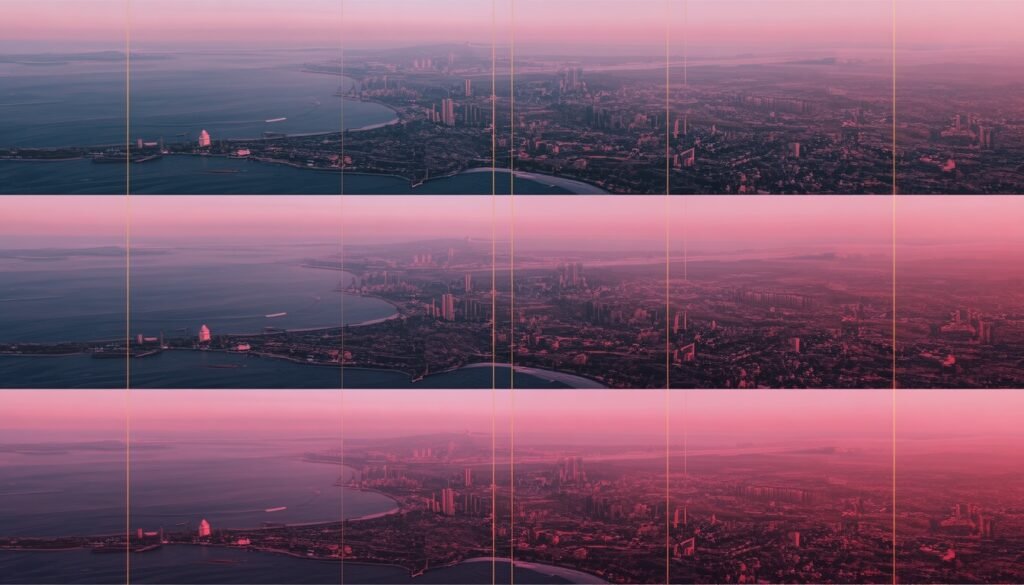
3. Lighting and Atmospheric Fidelity — Shown
Shown. Official footage displays complex lighting conditions — coastal haze, neon reflection on wet surfaces, strong directional sunlight through humid air.
Inferred: atmospheric scattering and volumetric effects of this quality are expensive and were heavily constrained on last-generation hardware.
Speculative: whether Grand Theft Auto VI uses hardware-accelerated ray tracing. Both console architectures support it. Rockstar has not stated whether the game implements it, or in what form.
4. Material and Surface Detail — Shown
Shown. Trailer material displays fine surface detail across skin, fabric, vehicle paint and wet asphalt.
Inferred: larger memory budgets permit higher-resolution texture sets held in active memory rather than streamed aggressively. Both current consoles carry 16GB of unified memory versus 512MB on the original GTA V platforms — a difference of more than thirty times.
5. Animation Fidelity — Shown
Shown. Character animation in official footage shows substantial advancement over the 2013 baseline.
Inferred: Rockstar’s RAGE engine has been iterated significantly since Red Dead Redemption 2 in 2018, and the visible animation blending and weight simulation are consistent with continued development of that lineage.
Not confirmed: engine version, technique names, or implementation details. Rockstar does not publish engine documentation.
6. The Xbox Series S Question — Unresolved
Analytical. The confirmed platform target “Xbox Series X|S” includes the Series S, which has reduced memory allocation and GPU throughput relative to the Series X.
Across current-generation releases, that difference typically resolves as lower rendering resolution, reduced settings, or both.
Confirmed: nothing. Rockstar has published no platform-specific targets.
7. The Missing Numbers
A precise inventory of what has not been published:
| Metric | Status |
|---|---|
| Resolution targets | Not published |
| Frame rate targets | Not published |
| Ray tracing implementation | Not published |
| Performance vs quality modes | Not published |
| Install size | Not published |
| Draw distance figures | Not published |
| PC requirements | No PC version announced |
Seven metrics, zero published. For a premium release two months from launch with pre-orders live at $80 and $100, this is a genuinely unusual position and worth stating plainly rather than filling with estimates.
Why Visual Comparisons to GTA V Are Misleading
A frequent framing holds that GTA 6 “looks better than GTA V.” That is true and uninformative.
The meaningful comparison is architectural. GTA V was designed to fit within 512MB of split memory on mechanical storage with a 2005-era CPU. Grand Theft Auto VI starts from 16GB unified memory, NVMe streaming and a modern processor as its minimum target.
The visual difference is not a generational polish pass. It is a different set of design constraints producing a different kind of game.
The Technical Bottom Line
Official footage demonstrates density, lighting complexity and animation fidelity consistent with a title built natively for current-generation hardware. The platform decision to skip last-gen is the enabling factor.
What cannot be said is how it performs. No targets exist publicly, and any resolution or frame-rate figure currently circulating is not sourced to Rockstar Games. Those numbers become verifiable on November 19, 2026 and not before.
Frequently Asked Questions
FAQ 1
Question: Does GTA 6 use ray tracing?
Answer: Unconfirmed. Both current-generation console architectures support hardware ray tracing, but Rockstar has not stated whether GTA 6 implements it.
FAQ 2
Question: What resolution does GTA 6 run at?
Answer: Rockstar has not published resolution targets for any platform. Figures circulating online are unverified.
FAQ 3
Question: Why does GTA 6 look so much better than GTA 5?
Answer: GTA V was architected for 2005-era hardware with 512MB of memory. GTA 6 targets current-generation consoles with 16GB unified memory and NVMe storage as its minimum baseline.
FAQ 4
Question: Will GTA 6 look worse on Xbox Series S?
Answer: Rockstar has not published platform-specific targets. Current-generation releases generally scale resolution or settings on Series S, but nothing has been confirmed for GTA 6.
FAQ 5
Question: What engine does GTA 6 use?
Answer: Rockstar develops on its proprietary RAGE engine lineage, but the studio has not published version or technical documentation for Grand Theft Auto VI.
Written by
Sunset Pulse Team
We’re the Sunset Pulse newsroom — a crew of lifelong GTA players who track every trailer, gameplay reveal and community discovery so you don’t have to. Fast, fair and fact-checked.
Meet the newsroom

Drop a comment