GTA 6 Relationship Design: 5 Best Shocking Two-Hander Shifts

GTA 6 Relationship Design:
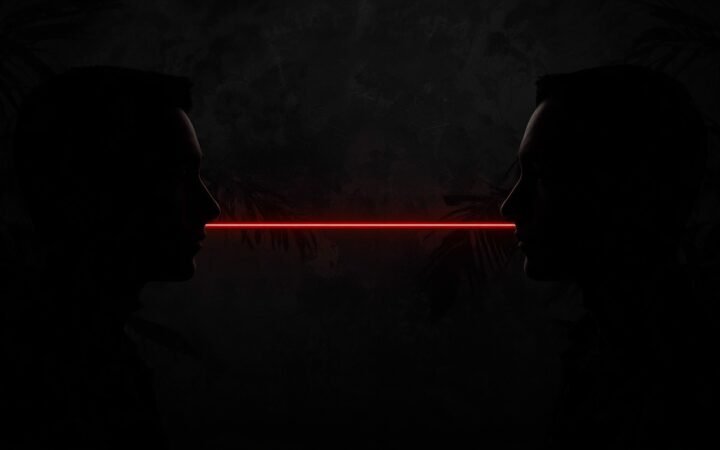
Rockstar’s official material presents Jason and Lucia as connected rather than as parallel operators who occasionally intersect. That framing — a genuine peer relationship at the centre of a Grand Theft Auto — is a structural departure worth examining.
Rockstar has published no details about their relationship: no backstory, no history, no characterisation. What can be analysed is what the configuration makes possible.
1. Grand Theft Auto Protagonists Are Normally Structurally Alone
The baseline the series has run for decades.
The traditional Grand Theft Auto protagonist has associates, handlers, employers and rivals — but not peers. Every relationship runs upward or downward through a hierarchy.
Consequence of that design: trust is always provisional. Betrayal is structurally expected. The player learns to treat every NPC as a potential problem.
What a peer relationship changes: it creates a relationship the player is not expected to be suspicious of, which is an entirely different emotional baseline for the series.
2. Two Concentrates What Three Distributes
The GTA V comparison.
Three protagonists produce a network: three pairwise relationships plus a group dynamic. Narrative weight spreads across all of them, and none can be fully developed because screen time divides.
Two produce a line. All relational weight sits on one axis.
| Configuration | Effect |
|---|---|
| Three protagonists | Variety of relational texture, limited depth per relationship |
| Two protagonists | Single relationship, developed across the full campaign |
Design consequence: the relationship has to carry the story rather than supplement it. That is a higher-risk, higher-ceiling configuration.
3. It Enables Internal Conflict as a Primary Engine
Newly available structurally.
With a peer relationship at the centre, the primary tension can be internal — divergent goals, incompatible limits, a relationship under strain — rather than external opposition.
External antagonists still exist under that model, but they function as pressure on the relationship rather than as the destination.
Why this matters: it is a narrative engine Grand Theft Auto has not used. GTA V’s inter-protagonist friction was its most memorable element, but it was a byproduct of the three-lead structure rather than its purpose.
Confirmed: nothing. Rockstar has published no plot or premise.
4. Mission Design Must Resolve Presence
The mechanical consequence of a relationship-centred narrative.
If the relationship is the story, the two characters presumably share substantial screen time. That raises design questions with no default answer:

- Are both present in most missions, or do they operate separately?
- If both are present, is one AI-controlled — the Red Dead Redemption 2 companion model?
- Is switching player-directed, as in GTA V?
- Can the player choose whose perspective to occupy at key moments?
Each answer produces a materially different game. Rockstar has documented none of them.
5. The Player Occupies a Different Position
Analytical.
With one protagonist, the player becomes that person. With three, the player rotates between perspectives.
With two, the player occupies a position between them — closer to directing a relationship than inhabiting an individual.
Why this is worth noting: it changes what the player is asked to care about. Not “what happens to me” but “what happens between them,” which is a different kind of engagement and one Rockstar’s recent work is well positioned for.
Relevant context: Red Dead Redemption 2’s critical standing rests primarily on sustained character writing rather than systems novelty.
What Is Not Confirmed
| Element | Status |
|---|---|
| Nature of the relationship | Not published |
| Shared history or backstory | Not published |
| Whether both appear in missions | Not documented |
| Switching mechanics | Not documented |
| Whether the relationship changes across the story | Not published |
| Any ending or resolution | Not published |
Six rows, zero published.
Consequence: every description of Jason and Lucia’s relationship circulating online is reading trailer footage, not reporting information. Trailers invite interpretation by design; that is what they are for.
The Analytical Bottom Line
The two-protagonist structure gives Grand Theft Auto VI a narrative configuration the series has not used: a peer relationship at the centre, with concentrated rather than distributed weight.
That configuration is best suited to sustained character writing, which is where Rockstar’s most recent work is strongest. Whether the studio uses it that way is the open question.
November 19, 2026 answers it.
Frequently Asked Questions
FAQ 1
Question: What is the relationship between Jason and Lucia?
Answer: Rockstar has published no details. Official footage presents them as connected rather than as separate operators, but no backstory or characterisation has been released.
FAQ 2
Question: How is a two-protagonist story different from GTA V’s three?
Answer: Three protagonists distribute narrative weight across a network; two concentrate it onto a single relationship that must carry the story rather than supplement it.
FAQ 3
Question: Will Jason and Lucia appear in missions together?
Answer: Not documented. Rockstar has published no information about mission presence or switching mechanics.
FAQ 4
Question: Could the two protagonists come into conflict?
Answer: Structurally possible and newly available with a peer relationship at the centre, but Rockstar has published no plot or premise.
FAQ 5
Question: Are online descriptions of their relationship accurate?
Answer: They are interpretations of trailer footage. Rockstar has published no relationship details for them to be based on.
Written by
Sunset Pulse Team
We’re the Sunset Pulse newsroom — a crew of lifelong GTA players who track every trailer, gameplay reveal and community discovery so you don’t have to. Fast, fair and fact-checked.
Meet the newsroom